

Heart & Arrow
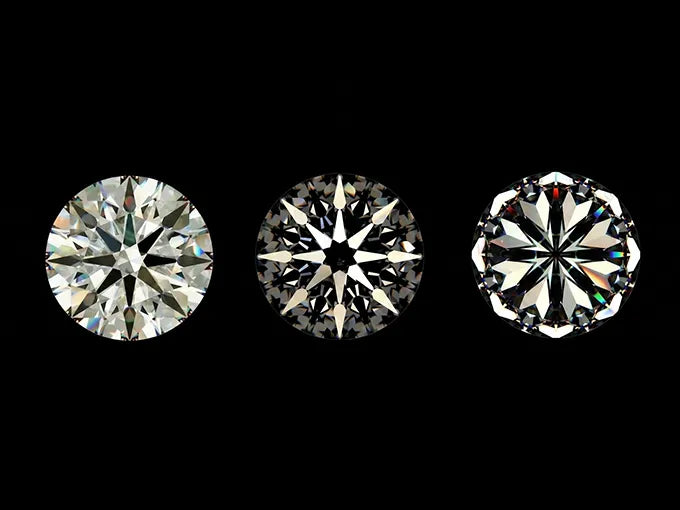
Hearts & Arrows (H&A) diamonds represent one of the highest standards of precision cutting in the diamond industry. They are crafted with such exact symmetry and alignment that, when viewed through a special reflective viewer or scope, their internal facet reflections overlap perfectly to form distinct patterns. When the diamond is observed face-down, a symmetrical arrangement of eight “hearts” can be seen, and when viewed face-up, a matching pattern of eight “arrows” appears. This visual phenomenon is not accidental—it is the direct result of master-level craftsmanship, strict facet proportions, and precise polishing that goes far beyond ordinary cutting standards.

The Hearts & Arrows pattern is most often associated with Excellent or Ideal cut grades, meaning the diamond has been fashioned to achieve optimal light performance, fire, and brilliance. These diamonds are known for their superior optical symmetry, maximizing the stone’s ability to reflect and refract light in the most dazzling way possible. While many diamonds may carry high cut grades, only a fraction display true Hearts & Arrows precision, which is why they are considered rare and highly sought after by discerning buyers. Owning a Hearts & Arrows diamond is not just about possessing a beautiful gem; it also represents the assurance of quality, craftsmanship, and perfection. Collectors and couples often choose H&A diamonds for engagement rings and fine jewelry because the cut demonstrates both technical mastery and a romantic symbolism—the “hearts” symbolizing love and the “arrows” symbolizing direction, destiny, or strength.
In summary, Hearts & Arrows diamonds stand at the pinnacle of diamond cutting. They combine artistry, science, and symbolism, making them one of the most prestigious and desirable options for anyone seeking the very best in brilliance and precision.
Diamond Shapes
Diamond Shapes (Fancy Shapes Explained)
Diamonds come in a wide variety of shapes, each with its own unique personality, brilliance, and appeal. While the Round Brilliant cut remains the most popular and traditional option, there is an entire world of “fancy shapes” that offer distinctive styles—from sleek and modern designs to romantic and vintage-inspired silhouettes. A diamond’s shape not only affects how it sparkles but also how it looks when worn, how it reflects your personality, and even how much it costs. Choosing the right shape is both a matter of style and practicality.

Round Brilliant
- Overview: The Round Brilliant cut is by far the most classic and timeless choice, representing over half of all diamonds sold worldwide.
- Features: With 57–58 precisely arranged facets, it is engineered to reflect the maximum amount of light, resulting in unmatched brilliance, fire, and scintillation.
- Symbolism: Associated with eternal love, tradition, and elegance.
- Why Choose It: Perfect for those who want a diamond that never goes out of style, with the brightest sparkle possible.

Princess Cut
- Overview: A modern and striking cut, the Princess is usually square but can also be slightly rectangular.
- Features: With its sharp, uncut corners and brilliant faceting, it delivers exceptional sparkle and a contemporary edge.
- Symbolism: Represents strength, sophistication, and individuality.
- Why Choose It: Ideal for those who want a balance of sparkle and a bold, clean-lined look.

Emerald Cut
- Overview: A rectangular shape with step-cut faceting that emphasizes clarity and depth rather than sparkle.
- Features: The long facets create a “hall of mirrors” effect, with flashes of light that are subtle and elegant instead of fiery.
- Symbolism: Known for refinement, sophistication, and understated glamour.
- Why Choose It: Perfect for someone who values elegance, precision, and the dramatic beauty of clean lines. Best for high-clarity stones since inclusions can be more visible in this cut.

Radiant Cut
- Overview: A hybrid shape that combines the outline of an emerald cut with the brilliance of a round.
- Features: Its 70 facets create exceptional sparkle and fire, while the trimmed corners make it more durable than square or rectangular cuts with pointed edges.
- Symbolism: Bold, lively, and glamorous.
- Why Choose It: Great for those who want maximum sparkle with a less traditional, more modern flair.
Oval Cut
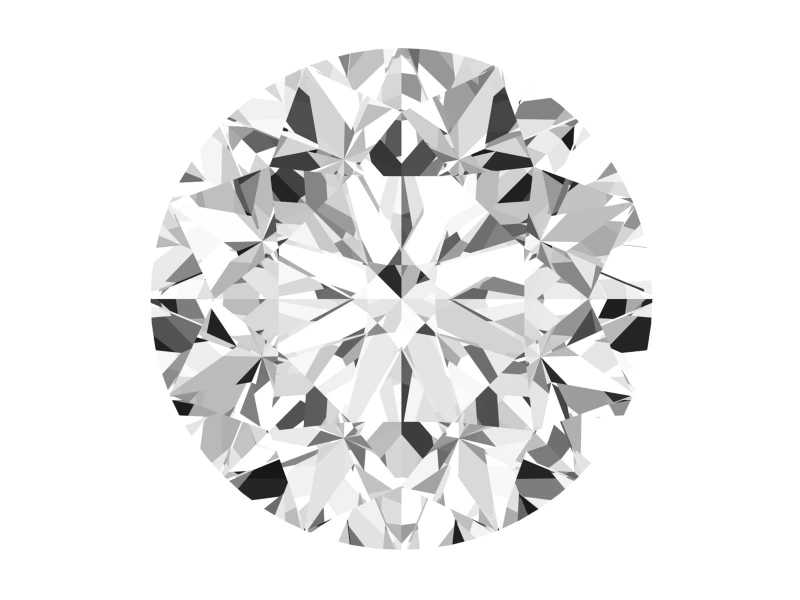
- Overview: An elongated version of the Round Brilliant, the Oval cut has a graceful and feminine appearance.
- Features: Offers plenty of sparkle while creating the illusion of length, making the finger appear slimmer and longer.
- Symbolism: Romance, creativity, and elegance.
- Why Choose It: Perfect if you love brilliance but want something more unique than a round.

Marquise Cut
- Overview: A dramatic, boat-shaped diamond with pointed ends.
- Features: Known for its ability to maximize carat weight, making the diamond appear larger than it actually is.
- Symbolism: Regal elegance and bold statement-making.
- Why Choose It: Ideal for someone who wants a diamond with flair and finger coverage.

Pear Cut
- Overview: A teardrop-shaped cut that combines the best elements of the Round and Marquise.
- Features: One rounded end and one pointed tip create a distinctive silhouette that elongates the finger.
- Symbolism: Elegance, individuality, and a sense of uniqueness.
- Why Choose It: Perfect for those who love unconventional designs with romantic charm. Proper orientation (pointing upward) enhances its graceful effect.

Cushion Cut
- Overview: Often referred to as a “pillow cut,” the Cushion has soft, rounded corners and larger facets.
- Features: It combines vintage charm with modern brilliance, offering a romantic, timeless feel.
- Symbolism: Romance, warmth, and vintage beauty.
- Why Choose It: A versatile cut that works well in both classic and contemporary settings, often more affordable than rounds of similar carat weight.

Asscher Cut
- Overview: Similar to the Emerald cut but square in shape, with a step-cut facet pattern and cropped corners that give it an octagonal outline.
- Features: Known for its deep pavilion and high crown, which create a mesmerizing “windmill” effect in the light.
- Symbolism: Vintage charm, sophistication, and introspection.
- Why Choose It: A perfect choice for those who love antique-inspired jewelry with an Art Deco flair.

Heart Cut
- Overview: The ultimate symbol of romance, this shape is unmistakably sentimental.
- Features: A modified brilliant cut with a distinctive heart outline, requiring expert craftsmanship to achieve perfect symmetry.
- Symbolism: Love, passion, and commitment.
- Why Choose It: A meaningful choice for true romantics or special milestone gifts. Best suited for larger stones where the heart shape can be clearly appreciated.

Choosing the Right Diamond Shape
- For Elongation: Choose elongated cuts like Oval, Marquise, Pear, or Emerald to make fingers appear slimmer and longer.
- For Sparkle: Round, Princess, Radiant, and Oval are the most brilliant.
- For Lifestyle: If you’re active, avoid fragile points (Princess, Marquise, Pear, Heart) unless set in protective settings. Rounded cuts like Round, Oval, and Cushion are more durable for daily wear.
In the end, your diamond shape is a reflection of your personality and style. Whether you choose the timeless brilliance of a Round or the romantic charm of a Heart, the right cut will make your diamond truly yours.
Diamond Ratio
1. Length-to-Width Ratio
- The length-to-width ratio (L/W) is one of the most important proportions, especially for fancy shapes (oval, emerald, pear, marquise, cushion, etc.).
- It determines how balanced and elegant the diamond looks.
- Round diamonds should be close to 1.00 (perfectly round).
- Ovals often look best between 1.35–1.50.
- Emerald and radiant cuts are usually pleasing between 1.30–1.50.
- Pear and marquise cuts look elegant around 1.45–1.75.
2. Table and Depth Ratios
- Table % (the flat top facet) and Depth % (height of diamond relative to width) impact brilliance.
- Ideal ranges vary by shape, but generally:
- Table %: 54–60% (rounds), similar ranges apply for other shapes with slight variation.
- Depth %: 59–62% (rounds), adjusted per shape.
- Too deep = smaller face-up look.
- Too shallow = light leakage and less sparkle.
3. Crown & Pavilion Angles
- These angles control how light reflects.
- The right balance avoids a “dark” or “glassy” look.
- Round brilliants have the most strict standards (ideal crown angle ~34–35°, pavilion ~40.6–41°).
4. Personal Preference
- Some buyers prefer longer, slender shapes (higher ratio), while others prefer wider, balanced looks (lower ratio).
- The “right” ratio blends optical performance (sparkle) with aesthetics that suit the wearer’s taste.
GIA vs IGI
When you buy a diamond, its certificate is your guarantee of quality. Two of the most trusted names in the world are GIA (Gemological Institute of America) and IGI (International Gemological Institute). Both are respected, reliable, and internationally recognized — they just shine in slightly different ways.

GIA – The Gold Standard
Founded in 1931, GIA is the world’s most prestigious diamond grading lab.
Famous for creating the “4Cs” (cut, color, clarity, carat), it sets the benchmark for accuracy and consistency.
GIA is the top choice for natural diamonds, giving buyers the highest level of trust and long-term value.
Best For: Customers who want the most prestigious certification and assurance of the strictest grading standards.

IGI – The Modern Leader
Established in 1975, IGI is now one of the largest gem labs in the world.
Especially respected for lab-grown diamonds, where it was one of the first to provide professional, consistent grading.
Known for being faster and more affordable, IGI makes certification accessible while still maintaining trust and quality.
Best For: Customers who value affordability, speed, and lab-grown diamond expertise.

Why Both Are Great
Trusted Worldwide: Both GIA and IGI reports are accepted globally.
Peace of Mind: Each certificate proves your diamond’s authenticity and quality.
Different Strengths:
GIA = prestige and strict standards for natural diamonds.
IGI = affordability, speed, and leadership in lab-grown diamonds.
You can feel confident with either GIA or IGI. Both are excellent choices — it just depends on what matters most to you: prestige and strict grading (GIA), or affordability and lab-grown expertise (IGI).

Lab-Grown vs. Natural Diamonds
The biggest difference between lab-grown and natural diamonds is their origin. Natural diamonds are created deep within the earth over billions of years, while lab-grown diamonds are made in modern laboratories in just weeks — but both are real diamonds. Chemically, physically, and visually, they are virtually identical.

Origin
- Natural Diamonds: Formed naturally under extreme heat and pressure in the Earth’s mantle over millions (even billions) of years.
- Lab-Grown Diamonds: Created in laboratories using advanced technology — either HPHT (High Pressure High Temperature) or CVD (Chemical Vapor Deposition) — which replicate the natural diamond-growing process.

Chemical & Physical Properties
- Same: Both are made of pure carbon, have the same crystal structure, hardness (10 on the Mohs scale), brilliance, and sparkle.
- Differences: Only gemological equipment can typically detect lab-grown diamonds. Some inclusions or fluorescence patterns may differ, but to the naked eye, they look the same.

Cost
- Natural Diamonds: Higher price, reflecting rarity and tradition.
- Lab-Grown Diamonds: Typically 30–70% less expensive than natural diamonds of similar size and quality, making them a budget-friendly option for larger carat weights or higher grades.

Certification & Grading
Both lab-grown and natural diamonds are graded by top gemological labs (like GIA and IGI) using the same 4Cs standards: cut, clarity, color, and carat.
Environmental & Ethical Considerations
- Natural Diamonds: Mining has environmental impact, though many mining companies now focus on ethical sourcing and sustainability initiatives.
- Lab-Grown Diamonds: Avoid traditional mining but still require energy to produce. Many consumers see them as a more eco-conscious and ethical choice.

Cultural Significance
- Natural Diamonds: Deeply rooted in history and tradition, symbolizing rarity, permanence, and heritage.
- Lab-Grown Diamonds: A modern alternative, seen as innovative, sustainable, and accessible — especially popular with younger generations.
The Bottom Line
- Natural Diamonds: Best for those who value tradition, rarity, and long-term value.
Lab-Grown Diamonds: Best for those who want a sustainable, affordable, and equally beautiful diamond without compromise on quality.
No matter which you choose, both lab-grown and natural diamonds are real diamonds, and both shine brilliantly for a lifetime.
Lab-Grown vs. Natural Diamonds – At a Glance
| Feature | Natural Diamonds | Lab-Grown Diamonds |
|---|---|---|
| Origin | Formed deep within the Earth over millions of years. | Created in a laboratory using advanced technology (HPHT or CVD). |
| Composition | Pure carbon with an identical crystal structure. | Pure carbon with an identical crystal structure. |
| Appearance | Brilliant, with unique inclusions formed through natural growth. | Brilliant, may display different inclusions or fluorescence. |
| Price | Higher price, reflecting rarity and tradition. | Typically 30–70% less expensive for the same quality. |
| Resale Value | Generally holds stronger resale and long-term value. | Usually has a lower resale value because supply can be reproduced. |
| Certification | Certified by GIA, IGI, and other recognised gemological laboratories using the 4Cs. | Certified by GIA, IGI, and other recognised gemological laboratories using the 4Cs. |
| Environmental Impact | Mining affects land and natural resources, although many modern mines follow ethical and sustainable practices. | Eliminates mining but requires significant energy; often considered a more sustainable option by many buyers. |
| Cultural Significance | Valued for their rarity, heritage, and timeless appeal. | Modern, innovative, and increasingly popular, especially among younger buyers. |
Moissanite vs. Diamonds (Lab-Grown & Natural)
At first glance, moissanite and diamonds can look similar, but they are not the same gemstone. Diamonds — whether mined from the earth or grown in a laboratory — are made of pure carbon and represent the hardest, most prestigious gemstone in the world. Moissanite, on the other hand, is a completely different mineral (silicon carbide), created only in laboratories, and while beautiful, it does not carry the same qualities, value, or prestige as a diamond.

Composition & Origin
- Diamonds (Natural & Lab-Grown):
- Made of pure carbon, with a crystal structure unique to diamonds.
- Natural diamonds form deep within the earth over billions of years.
- Lab-grown diamonds are created using advanced technology (HPHT or CVD) that replicates natural conditions.
- Moissanite:
- Made of silicon carbide, a completely different mineral.
- Found naturally in tiny amounts but too rare for jewelry, so all moissanite is lab-created.
While lab-grown diamonds and natural diamonds are real diamonds, moissanite is not a diamond.
Hardness & Durability
- Diamonds:
Rank 10 on the Mohs scale — the hardest known mineral on Earth. - Incredibly resistant to scratches, making them ideal for lifetime wear (especially engagement rings).
- Moissanite:
- Ranks 9.25 on the Mohs scale, durable but softer than diamonds.
- Over time, it may show more wear on facet edges compared to diamonds.
Diamonds are unmatched in hardness and longevity.
Brilliance & Fire (Sparkle)
- Diamonds:
Famous for their white brilliance and a balanced amount of fire (flashes of rainbow color). - The sparkle is elegant, refined, and timeless.
- Moissanite:
- Has a higher refractive index, giving it more fire than diamonds.
- This creates a bold, rainbow-like sparkle often described as “disco ball” — which some find too artificial-looking compared to a diamond’s classic beauty.
Diamonds give a more natural, sophisticated sparkle, while moissanite can look overly flashy.
Refraction
- Diamonds:
- Singly refractive: light passes through in one clean path, giving crisp brilliance and sharp facet patterns.
- Moissanite:
- Doubly refractive: light splits into two rays, sometimes making facet junctions look doubled or blurry under magnification.
Diamonds have a cleaner, sharper sparkle.
Color
- Diamonds:
- Range from colorless (most valuable) to yellow, brown, and rare fancy colors.
- A truly colorless diamond is prized for its rarity and beauty.
- Moissanite:
Produced to appear colorless, but often shows a slight yellow, greenish, or gray tint under certain lighting.
Diamonds maintain a purer, whiter appearance.
Price & Value
- Diamonds:
- Both natural and lab-grown diamonds carry prestige and value.
- Natural diamonds have strong long-term and resale value due to rarity.
- Lab-grown diamonds are more affordable but still maintain authenticity as real diamonds.
- Moissanite:
- Much cheaper than diamonds of the same size.
Reflects its status as a diamond substitute, not the real thing. - Holds little to no resale value.
Diamonds hold prestige, rarity, and lasting value — moissanite does not.
- Diamonds (natural or lab-grown) are real, rare, and timeless, representing true luxury, durability, and beauty.
- Moissanite, while pretty and affordable, is a diamond alternative, not an actual diamond. Its overly colorful sparkle, lower hardness, and lack of prestige make it less desirable for fine jewelry, especially for engagement rings.
In short: Diamonds are forever. Moissanite is not.
What are the 4 C’s
Cut – Refers to how well the diamond has been shaped and proportioned. A well-cut diamond reflects light beautifully, giving it maximum brilliance and sparkle. Cut is often considered the most important of the 4 C’s.
Color – Measures how colorless a diamond is. The scale ranges from D (completely colorless and most valuable) to Z (light yellow or brown). The less color, the rarer and more desirable the diamond.
Clarity – Evaluates the presence of natural imperfections, called inclusions (inside) and blemishes (outside). The fewer and less visible the imperfections, the higher the clarity grade and value.
Carat – Represents the weight of the diamond, not just its size. One carat equals 200 milligrams. Larger diamonds are rarer and more valuable, but cut, color, and clarity also greatly affect a diamond’s beauty and price.
Together, these four factors determine a diamond’s quality, beauty, and value.